


If you’re looking for the best crypto ETFs in Australia, there are a handful of funds that consistently stand out for their simple exposure to Bitcoin, Ethereum, or wider digital asset baskets.
But knowing which one fits your risk level and long-term strategy isn’t always straightforward.
This guide will break down what each major crypto ETF offers, how they differ, and the best platforms in Australia to buy them.
Can You Buy Crypto ETFs in Australia?
For beginners who don’t want to worry about private keys, gas fees, wallets, or shady exchanges, crypto ETFs are a more traditional, regulated on-ramp to the market.
You can invest in crypto ETFs through the Australian Stock Exchange (ASX), which currently has five available, including Vaneck Bitcoin ETF (VBTC), Betashares Crypto Innovators ETF (CRYP), and Global X 21Shares Bitcoin ETF (EBTC).
Aside from the ASX, there are other types of ETFs you can invest in:
- Crypto exchange-traded products (ETPs): These trade on Cboe Australia, not the ASX. They function similarly to ETFs and provide exposure to Bitcoin or Ethereum, but crypto ETPs directly hold the underlying digital assets.
- International spot crypto ETFs: Australians can access US-listed spot Bitcoin and Ethereum ETFs through select brokers that allow international trading.
- Crypto-related ETFs: These don’t hold crypto directly but invest in companies offering crypto services or holding crypto as part of their treasury.
Is Investing in Foreign ETFs Legal in Australia?
Australians can legally invest in foreign ETFs, including US-listed crypto ETFs. You just need access to an international brokerage account, which many Australian trading platforms already provide.
Some local platforms offer a separate global markets account so you can buy ETFs listed on exchanges like the New York Stock Exchange (NYSE) or Nasdaq. You can also use global platforms directly, as long as they accept Australian residents.
Once you’re set up, investing in foreign ETFs works the same way as buying local ones, but there are a few extra factors to keep in mind.
Gains from international ETFs still fall under Australian Capital Gains Tax (CGT), and some markets apply withholding tax on dividends. Aussie investors typically fill out a form through their broker to reduce this tax.You also need to factor in exchange rates. Your investment moves not only with the ETF price but also with AUD/USD fluctuations, which can amplify or reduce your returns.
It’s important to remember that foreign ETFs aren’t regulated by the Australian Securities and Investments Commission (ASIC). If you’re buying a US-listed ETF, it falls under the Securities and Exchange Commission (SEC) oversight instead.
The Best Crypto ETFs in 2025
If you want exposure to crypto without managing wallets or private keys, US-listed crypto ETFs are one of the easiest entry points. Below are some of the most popular options in 2025.
What Is The Best Bitcoin ETF (Spot $BTC Exposure)?
These ETFs directly hold Bitcoin, which gives you pure $BTC price exposure without actually holding the coin.
iShares Bitcoin Trust (IBIT)
Managed by BlackRock, the IBIT has quickly grown into one of the largest spot-$BTC ETFs in the market. IBIT has about $88B in assets under management (AUM). The management fee is 0.25% after any initial launch waiver period.
Custody for IBIT’s Bitcoin is handled by Coinbase, which gives you institutional-grade storage and security.
What makes IBIT different from other ETFs is its massive scale and liquidity. The size of this ETF means tight bid-ask spreads and easy entry or exit, even for large orders.
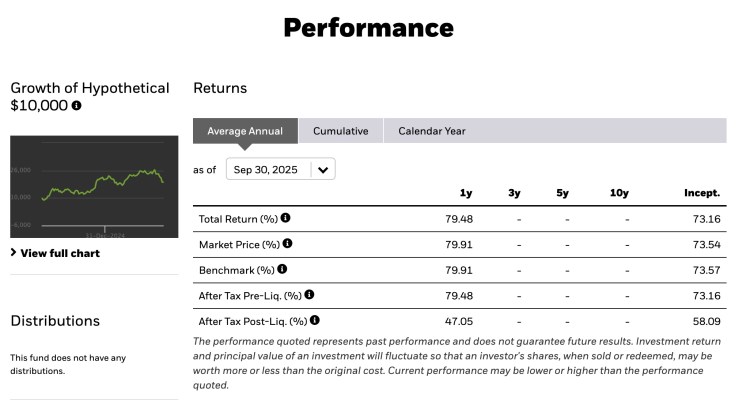
Fidelity Wise Origin Bitcoin Fund (FBTC)
The FBTC from Fidelity Investments offers a 0.25% management fee at the time of writing, and it manages roughly $21B AUM. Custody is handled by Fidelity Digital Assets, so the fund stores actual Bitcoin under regulated custody.
Its key differentiator is the reliability of a legacy asset manager with a strong track record.
Grayscale Bitcoin Trust ETF (GBTC)
GBTC, previously a closed-end trust, has now converted into a spot ETF. It still holds considerable weight, with its AUM at around $19B. But its management fee is steep at 1.50%.
Custody arrangements are with Coinbase Custody Trust as a part of its fund setup. GBTC was among the first widely accessible Bitcoin investment funds.
VanEck Bitcoin Trust (HODL)
HODL charges 0.20% per year and has an AUM of around $1.5B. Custody is provided by Gemini Trust Company with regulated cold-storage.
Among newer ETFs, HODL is a good choice for those looking for lower fees over the long term, though its smaller size can mean slightly wider spreads than larger ETFs like IBIT.
ARK 21Shares Bitcoin ETF (ARKB)
ARKB, a partnership between ARK Invest and 21Shares, charges a management fee of 0.21%. Its AUM is around $4.2B, and custody is handled by a mix of institutional-grade firms, including Coinbase Custody Trust Company, BitGo, and Anchorage. What sets AKRB apart is its moderate fees and the backing of ARK Invest.
Here’s a comparison table for all the ETFs above.
| ETF | AUM | Expense Ratio |
| IBIT | ~$88B | 0.25% |
| FBTC | ~$21B to $22B | 0.25% |
| GBTC | ~$19B to 20B | 1.50% |
| HODL | ~$1B to $1.5B | 0.20% |
| ARKB | ~$4.2B to $4.3B | 0.21% |
What Is The Best Ethereum ETF (Spot $ETH Exposure)?
These ETFs give you direct exposure to $ETH, the fuel behind the largest decentralized finance (DeFi) and altcoin ecosystems.
iShares Ethereum Trust (ETHA)
ETHA from BlackRock is a heavyweight in the $ETH ETF space. It has an AUM of roughly $15B at the time of writing, and its management fee is 0.25% per year.
Custody of the underlying $|ETH is handled via institutional-grade Ethereum storage, through custodians including Coinbase Prime and Coinbase Custody.
What sets ETHA apart is its deep liquidity and broad institutional backing, which means entry and exit are easier.
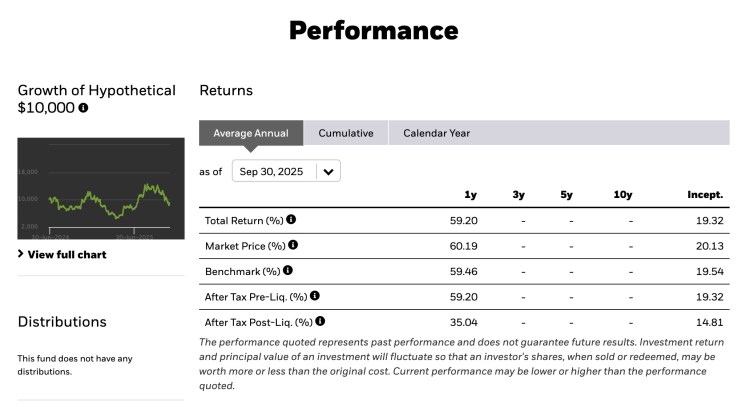
Fidelity Ethereum Fund (FETH)
FETH from Fidelity Investments has an AUM of about $2.25B with a management fee of 0.25%. Its $ETH holdings are custodied by Fidelity Digital Asset Services LLC, a regulated enterprise-grade custody arm.
The main draw for FETH is institutional-grade custody with a credible brand, making it a good choice for investors who want stability and firm backing.
ARK 21Shares Ethereum ETF (EETH)
EETH, a product of ARK Invest and 21Shares, offers the backing of a crypto-native issuer. The fund charges 0.25% in fees, and its AUM is around $2B.
Below is a comparison table of the best Ethereum ETFs in Australia.
| ETF | AUM | Expense Ratio |
| ETHA | ~$15B to $15B | 0.25% |
| FETH | ~$2.25B | 0.25% |
| EETH | ~$2B | 0.25% |
What Are The Best Multi-Crypto and Blockchain Industry ETFs?
These ETFs don’t hold crypto directly, but they do give you exposure to companies involved in the space.
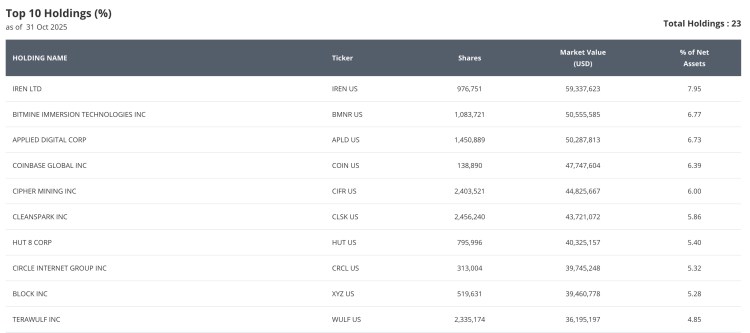
VanEck Digital Transformation ETF (DAPP)
DAPP invests in publicly traded firms building crypto infrastructure, such as miners, exchanges, and blockchain-tech companies. These include Cipher Mining, Bitmine, and CleanSpark.
The ETF holds approximately $390M in AUM and has a fee of 0.51% per year.
Global X Blockchain ETF (BKCH)
BKCH tracks a broad index of firms involved in blockchain technology adoption, digital asset infrastructure, mining, and related services. These include Riot Platforms and CleanSpark.
The ETF’s net assets are around $328M, and it charges a 0.50% annual fee.
Amplify Transformation Data Sharing ETF (BLOK)
BLOK holds around $839M in assets and charges an expense ratio of 0.73% per year. It has about 51 holdings, including companies developing new blockchain applications.
Here’s a comparison table to help you pick the right ETF.
| ETF | AUM | Expense Ratio |
| DAPP | ~$390M | 0.51% |
| BKCH | ~$238M | 0.50% |
| BLOK | ~$893M | 0.73% |
How We Selected the Best Crypto ETFs in Australia
We evaluated each crypto ETF on our list using the factors below, assessing more than performance. Here are the key criteria we used:
- Asset manager reputation: We favored ETFs backed by well-known, established managers like BlackRock, Fidelity, ARK Invest, and 21Shares. Strong reputations show solid operational structure, secure custody, and consistent fund oversight.
- Fund structure: We assessed whether the ETF is a spot ETF (holding real $BTC or $ETH) or futures-based (using derivatives). Spot ETFs offer more direct exposure, with futures ETFs involving roll costs and extra complexity.
- Custodial arrangements: We looked at who holds the underlying crypto, which are typically institutions like Coinbase Custody or Gemini, though some fund managers have assets in self-custody. Strong custody partners protect investors from hacks or operational failures.
- Tracking accuracy: The best ETFs closely mirror the spot price of the underlying crypto. We selected funds with low tracking error (the differences between the ETF’s performance and the underlying benchmark index) and proven mechanisms for maintaining price integrity.
- Liquidity: High daily trading volume and strong assets under management (AUM) mean tighter spreads and better stability, which are crucial when markets turn volatile.
- Fees and expense ratios: Lower fees help investors maximize returns. We compared management fees across ETFs and noted where costs may impact gains over time. We also noted cases where fund managers offer fee waivers or promotional periods.
ETFs vs Direct Crypto Ownership: Which Is Best?
So, should you invest in crypto ETFs, or is it better to hold crypto directly?
Below, we take a look at the benefits and drawbacks of investing in ETFs and owning crypto directly so you can make an informed decision.
The Pros Of Investing In Crypto ETFS
- Easy to access through regulated platforms
- No need to manage wallets or private keys
- Benefit from investor protections under strong regulatory oversight, including disclosure requirements and audited holdings
The Cons Of Investing In Crypto ETFS
- Only five are available on the ASX
- Fees and expense ratios can reduce long-term gains
- You don’t actually own the underlying crypto, which means you can’t stake it, earn yield, or swap it for other tokens. You’re simply tracking the asset’s price through the ETF
The Pros Of Direct Crypto Ownership
- Full control over your assets
- Access to staking and other yield-generating opportunities
- Trade 24/7 across multiple platforms
- You can diversify across thousands of tokens, not just major coins
The Cons Of Direct Crypto Ownership
- You’ll need to learn how to keep your wallet secure and implement safe trading practices
- You’re responsible for custody, which carries more personal responsibility and potential risks, such as scams or losing private keys
The Best Platforms to Buy and Hold Crypto
For Australians looking to own crypto directly, the best and most trusted platforms include Bitcoin.com.au, Independent Reserve, and Binance.
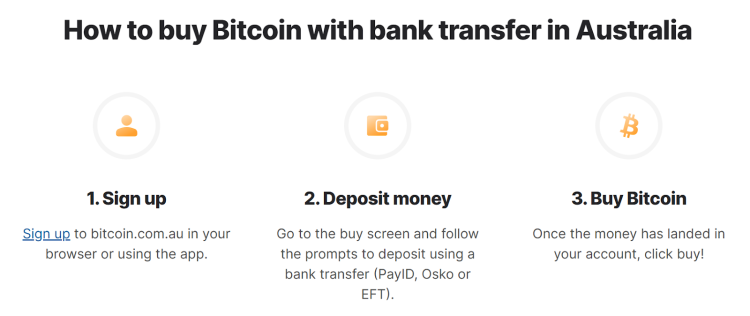
Bitcoin.com.au is ideal for investors who want to buy major cryptocurrencies like $BTC, $ETH, and $SOL using local payment methods and securely store them long-term in its built-in hot wallet. It’s our top pick for beginner crypto exchanges in Australia.
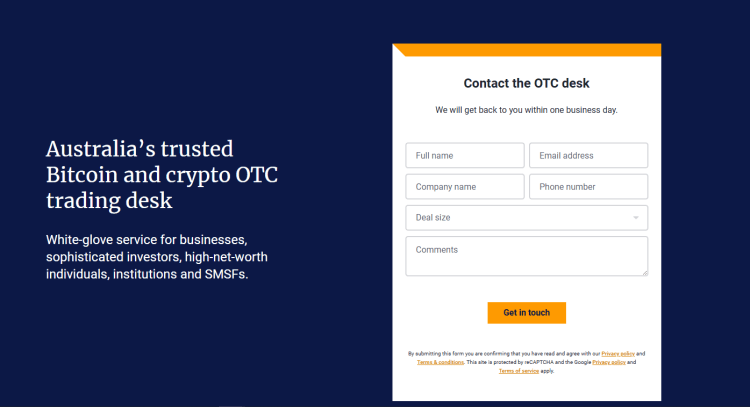
Independent Reserve is known for its robust security features, including an ISO 27001 certification, a duress password feature, and underground vaults for cold storage. It also operates an OTC trading desk for large orders, ideal for high net-worth individuals and institutional investors.
Binance is more suitable for active traders who want access to more markets, as it offers peer-to-peer (P2P) and margin trading.
They offer 24/7 trading and a wide range of cryptos to choose from, which makes it easy to grow your portfolio while keeping control of your digital assets.
Verdict: What’s the Best Bitcoin ETF in Australia?
The best crypto ETFs for most Aussie investors in 2025 are the major US-listed spot ETFs for their strong reputation and deep liquidity, such as IBIT, FBTC, and GBTC. For Ethereum exposure, ETHA and FETH lead the pack due to their robust regulation.
Remember, this isn’t financial advice. Buying and trading ETFs does come with some risk, so always do your own research and choose the provider and products that align with your investment strategy.
FAQs
1. What is the best crypto ETF in Australia?
The best overall crypto ETF for most investors is typically iShares Bitcoin Trust (IBIT), Fidelity Wise Origin Bitcoin Fund (FBTC), and Grayscale Bitcoin Trust ETF (GBTC). Each offers different levels of fees and risk, so it’s important to compare structures and costs before investing.
2. Can I buy crypto ETFs in Australia?
Yes, Australians can buy crypto ETFs, as they are legal in the country and listed on the ASX. You can also invest in crypto exchange-traded products (ETPs), international spot crypto ETFs, or crypto-related ETFs.
3. What is the lowest-fee Bitcoin ETF in Australia?
Currently, iShares Bitcoin Trust (IBIT) is one of the lowest-fee Bitcoin ETFs in Australia. It offers simple spot Bitcoin exposure with competitive management costs.