Reason to trust

How Our News is Made
Strict editorial policy that focuses on accuracy, relevance, and impartiality
Ad discliamer
Morbi pretium leo et nisl aliquam mollis. Quisque arcu lorem, ultricies quis pellentesque nec, ullamcorper eu odio.
By Marcus Hale, Digital Assets Correspondent
March 2026
A new entrant in the fast-evolving Web3 gaming sector is beginning to attract attention from both crypto-native investors and broader digital finance audiences. SoCrazy, a blockchain-based lottery protocol built on Solana, is presenting itself as a fully on-chain alternative to conventional online gambling platforms – an industry still largely shaped by centralized operators, opaque payout systems, and user trust concerns.
At the center of the project’s pitch is a straightforward claim: replace trust in operators with trust in transparent code.
From “Provably Fair” to Fully On-Chain
Many crypto gaming platforms market themselves as decentralized, yet still depend on off-chain systems for core functions such as randomness, outcome generation, treasury control, or payout approvals. That model may improve payments, but it does not fully remove the need for trust.
SoCrazy is attempting to move further. According to its materials, the protocol is designed so that ticket purchases, game logic, randomness, and prize settlement are handled directly on-chain through smart contracts on Solana. The result, in theory, is a gaming environment where users can independently verify outcomes rather than relying on platform assurances.
That distinction matters in a sector where credibility is often fragile. For users burned by delayed withdrawals, unverifiable mechanics, or custody risks, infrastructure that is visibly transparent can be a meaningful differentiator.
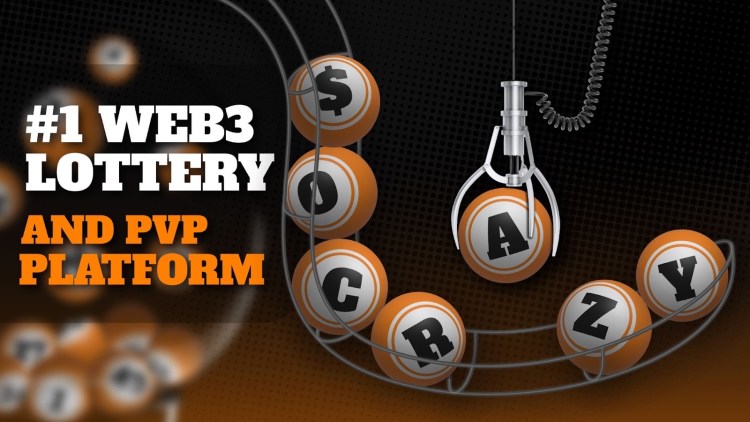
A Lottery Model Built for Web3
The first application planned for the SoCrazy ecosystem is a fully on-chain scratch-card lottery. Instead of replicating the complicated interfaces common in crypto casinos, the product appears designed around a simpler format: buy a ticket, reveal the result, and receive any winnings automatically.
The concept blends traditional lottery familiarity with blockchain-native execution. In practical terms, that means a player connects a wallet, enters non-custodially, and interacts directly with the protocol rather than depositing funds into a centrally controlled platform account.
Project materials also suggest that additional game types could follow, including PvP formats, community pools, progressive jackpots, and other interactive models that extend beyond the initial scratch-card use case.
The CRAZY Token at the Core
Powering the ecosystem is the CRAZY token, which is positioned as the native utility asset for platform participation. The token is intended to serve multiple functions across the ecosystem, including access to lottery products, governance participation, staking-related incentives, and broader user rewards.
This multi-role design is increasingly common in Web3 ecosystems, but execution remains the real test. A token can either function as a practical access layer for a protocol or become an overextended marketing centerpiece. SoCrazy’s long-term credibility will likely depend on whether token utility translates into sustained on-platform demand.
Tokenomics Designed Around Early Participation
One of the more eye-catching elements of the SoCrazy launch is its token distribution model. The total supply is set at 777,777,777 CRAZY, with the majority allocated to the presale. The project states that 70% of total supply is reserved for presale participants, while additional allocations are designated for DEX liquidity, community initiatives, CEX liquidity, marketing, and a relatively small team share.
That low team allocation is clearly being framed as a signal of community alignment. In a market where buyers are increasingly cautious about insider-heavy token structures, that message may resonate.
The presale itself is structured in seven stages, with prices increasing gradually as the offering progresses. The published DEX listing price is $0.0077, while the earliest stage begins at $0.0055055, implying a discount of 28.5% for the earliest buyers. Across all stages, the average presale discount is presented as 16.5%.
For speculative buyers, this creates a familiar incentive: enter early, capture pricing advantage, and position ahead of a public market debut. Whether that advantage holds, of course, depends on post-listing liquidity, demand, and broader market conditions.
>> FIND OUT MORE ABOUT $CRAZY <<
Solana as the Infrastructure Layer
SoCrazy’s choice of Solana is not surprising. The network has become a common destination for projects that require high throughput and low transaction costs, particularly in sectors such as consumer apps, trading, gaming, and micropayment-driven systems.
In the context of on-chain lottery mechanics, speed and cost matter. If a product depends on frequent low-value user interactions, high gas fees can quickly destroy usability. Solana’s transaction profile makes it a practical environment for experiments in fully on-chain gaming, especially when paired with development frameworks such as Anchor.
That said, infrastructure alone does not guarantee adoption. The protocol may be technically viable, but long-term traction will depend just as much on user experience, retention, trust, and the ability to build an active ecosystem around the product.
Security and Market Positioning
Security is another area where SoCrazy appears to be emphasizing reassurance. Its website materials reference an audit by SolidProof, while the whitepaper highlights smart contract review, non-custodial wallet interaction, transparent liquidity, and on-chain verifiability as foundational protections.
For potential participants, these signals matter. In token launches and gaming-related crypto products alike, security posture is often a deciding factor. Even so, investors and users tend to look beyond logos and audit mentions; they want to see whether risk disclosures are realistic, whether the roadmap is coherent, and whether the project team demonstrates operational credibility over time.

A Broader GambleFi Ambition
What makes SoCrazy more notable than a standard token presale is that it is not presenting itself solely as a consumer-facing lottery site. Its whitepaper frames the protocol as a broader infrastructure layer for GambleFi – one that could eventually support developers, shared liquidity systems, and additional gaming applications.
That is a larger ambition than launching a single branded dApp. If executed well, it could move the project from being a niche lottery product to becoming a reusable framework for decentralized gaming experiences built by third parties.
It is also the kind of vision that sounds compelling on paper but requires significant follow-through. The GambleFi category remains young, and few projects have yet proven they can build durable ecosystems rather than short-lived token narratives.
Outlook
SoCrazy is entering the market with several ingredients that tend to attract attention in Web3: a clear visual brand, a retail-friendly product concept, a staged presale, Solana-based infrastructure, and a message built around fairness, transparency, and automation.
The challenge now is execution.
If the project can deliver a smooth non-custodial product, maintain user confidence, and translate token utility into genuine platform activity, it could find a place within the next wave of blockchain gaming experiments. If not, it risks blending into a crowded field of ambitious crypto launches that looked promising before meeting the realities of adoption.
For now, SoCrazy appears to be making a calculated bet on a simple thesis: that lottery-style gaming, rebuilt as transparent on-chain infrastructure, can capture attention in a market still searching for trustworthy alternatives.
Disclosure: This article is a journalistic-style promotional draft based on project materials and is not financial advice. Participation in token sales and cryptocurrency markets involves significant risk.